
When goods must move safely from A to B, transport and storage of hazardous materials are governed by many rules. Safe handling during internal transport must be ensured at all times. Handling support improves safety and enables ergonomic work.

Here “transport of hazardous substances” means internal transport. Unlike conventional transport, it carries higher risk: container damage can harm people and the environment. Safety rules must be followed and risks avoided from the outset. Lift trucks, lifting aids, and handling systems used for heavy hazardous containers must meet requirements for moving large loads. For example, the German load handling ordinance (LasthandhabV) calls for suitable equipment to reduce physical risk: “The employer shall […] provide suitable work equipment, in particular mechanical equipment, to avoid manual handling of loads that endanger employees’ safety and health […].” (Section 2 LasthandhabV) The hazardous substances ordinance states: “The employer shall exclude hazards to health and safety of employees in activities involving hazardous substances [preferably by] designing suitable processes and technical control devices, using emission-free or low-emission forms, and using suitable work equipment and materials according to the state of the art.”
ezzFAST vacuum lifter ensures safety
Hazardous substances are often in drums or canisters that must be transported or emptied. Safety and ergonomics are paramount. Improper handling can cause environmental and health hazards. Tipping or dropping a drum risks damage and uncontrolled release. Manual carrying, lifting, or holding drums exposes staff to fatigue and loss of concentration. Suitable equipment minimises these risks.
Vacuum lifter for hazardous goods—drums and canisters
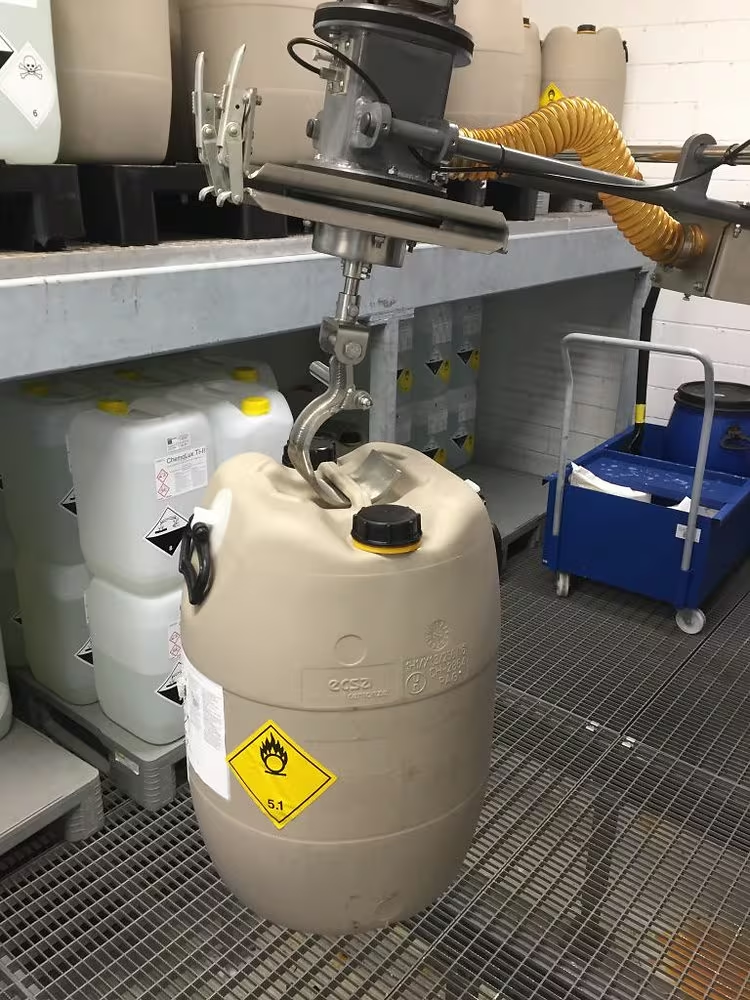
In our application example the ezzFAST vacuum lifter handles chemicals in a manufacturing plant, moving drums and canisters up to 250 kg. Lifting is from above or via canister handles. In a chemical and hazardous goods store, drums and canisters are delivered in spill pallets. For storage they are transferred to in-house plastic pallets. For use or disposal they are placed back in spill pallets before leaving the store. Best Handling Technology’s solution combines the vacuum lifter with a ceiling-mounted bridge crane covering the full storage area. A drum suction cup adapted to plastic and metal drums picks at the lid. A special canister attachment hooks into handles and prevents slipping during transport. Both attachments swap via a quick-change system.
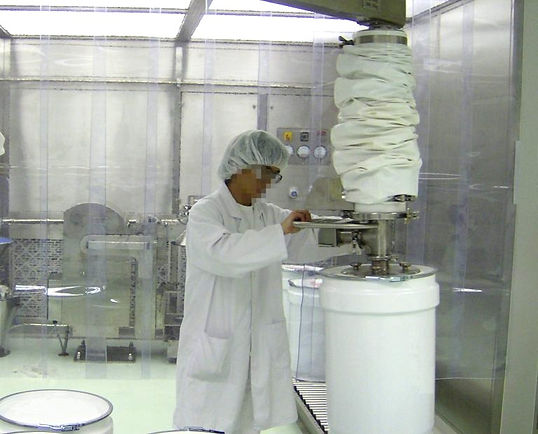
The solution benefits the customer in three ways. Safety: release is only possible after proper set-down, by design. Productivity: intuitive operation, appropriate lift/lower speed, and smooth crane motion support optimal speed; a second person is no longer needed for transfers. Ergonomics: heavy manual lifting is avoided and an extended control handle supports upright posture.
Use in explosive atmospheres
Hazardous substances are often handled in hazardous areas—the ATEX version of the vacuum lifter is suitable. Chemical and pharmaceutical plants frequently work in Ex zones. The basis is ATEX product directive 2014/34/EU on equipment design for hazardous areas. The ezzFAST from Best Handling Technology in ATEX configuration is well suited. Ignition sources must be avoided. In the Ex version, metal parts are stainless steel to avoid sparking; plastics are conductive or anti-static; the vacuum hose has an earthed metal helix at both ends, as does the supply hose; conductive parts are bonded. Depending on the Ex class, the vacuum pump is electric or pneumatic. In zone 0 the pump draws from the hazardous area and must be pneumatic—no moving parts; Venturi compressed air generates vacuum. An ATEX inlet filter upstream cleans air before it enters the pump.
The ATEX ezzFAST runs on a metal crane (aluminium or stainless steel) with bronze crane wheels. It can handle sacks with a cup; a pneumatic Ex gripper suits difficult picks—for example elastic plastic bags from a carton octabin.