26% of men and 21% of women feel strained by carrying and lifting heavy loads. It is no surprise that back problems are among the most common work-related complaints (51% of women and 44% of men). They are even the leading cause of sick leave at 21.2%. Suitable handling technology with ergonomic design can reduce these strains and occupational illness. Ergonomics and workplace design aim at humanity and economy: work should be as human-centred as possible, and ergonomic measures improve outcomes.
Ergonomic workplace design
Several workplace factors should be considered as coordinated systems:
- Work equipment such as machines, tools, hardware, and software
- Work environment (lighting, temperature, hazardous substances, noise, radiation, vibration, …)
- Workplace/space (movement space, reach envelopes, dimensions, chairs, tables, …)
- Work organisation (working time, workload, workflow, job rotation, breaks, …)
- Work content (variety of demands, load variation, …)
Human-centred design of work is also addressed in standards—for example DIN EN ISO 6385 on ergonomic principles for work systems, equipment, environments, and PPE.
Handling technology: adapting work to people
Employees who suffer physical wear often leave their occupation early. Ergonomic improvements with handling technology counter that: staff stay motivated, sick days drop, and efficiency can rise. Physical strain can be reduced with adapted handling systems, with direct positive effects on productivity. Healthy, satisfied employees work more efficiently, which affects the bottom line. Ergonomics is not a “nice to have”; it supports wellbeing and is a key factor for safety, quality, and productivity.
Handling technology: technologies for ergonomic support
Automation usually applies to repetitive processes. How can staff be relieved at interfaces with strenuous manual work? Various lift-and-move technologies combined with different gripping concepts yield many handling devices. The goal is to choose the optimal technology for each process—meaning, among other things:
- Maximum relief for the operator
- Simple, intuitive use
- Consideration of operators, e.g. frequent changes
- Adaptation to required speed and precision
- Economy
Handling aids support employees in industry and trades and help preserve their health.
Vacuum lifters
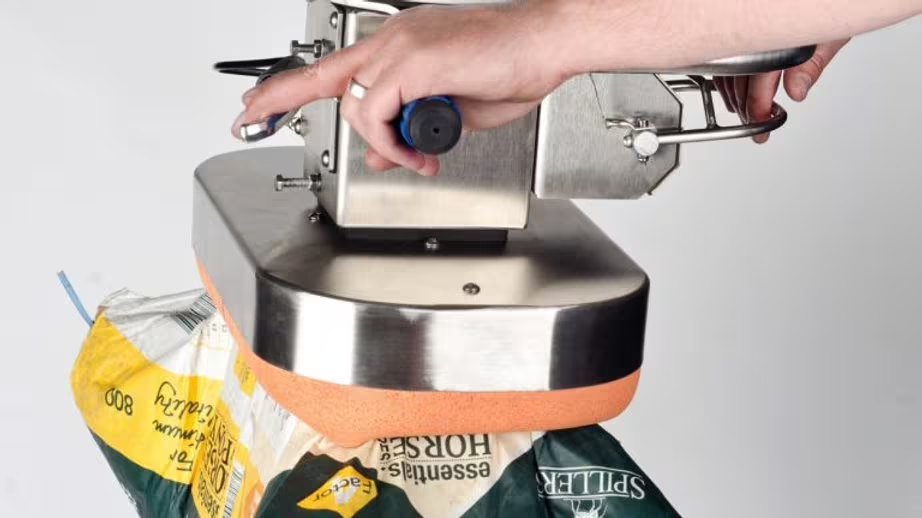
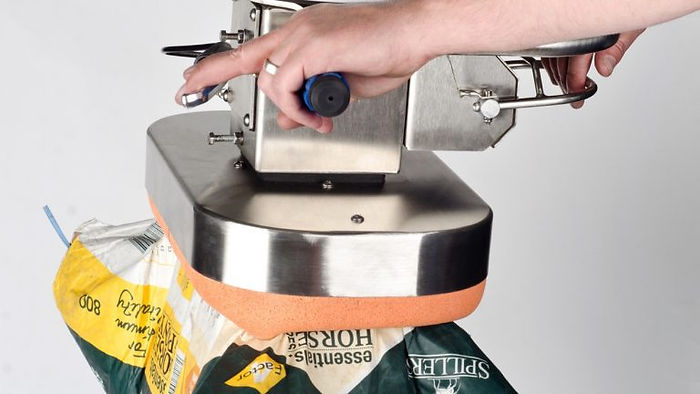
Fast movements at a workstation can be supported with a vacuum lifter. Products are lifted, moved, and placed without heavy manual lifting. Typical packages include sacks, cartons, and drums, plus buckets, crates, sheets and panels, rolls, and coils. With the right end effector, a stationary vacuum lifter adapts to many tasks and moves goods quickly, safely, and ergonomically.
Mobile lifting aids
A mobile lifting aid is location-independent and can be used at different stations as needed. It suits repeated lifting and short-distance transport between locations. Benefits include simple operation, safe pick-up and placement, and good manoeuvrability. Mobile aids are battery-powered and, with versatile standard accessories, support many lift-and-move tasks.
Lift trolleys
A lift trolley can perform many tasks: up/down, grip/release, pivot, tilt, programmed positions, and custom pick-up and manipulation.
The mobile ezzLIFTmaster can lift, lower, weigh, mix, pour, and more as modern handling technology.
Balancers
When sensitive products must be positioned, assembled, or joined with precision, a balancer is recommended. Products are guided directly by hand. Applications include joining and assembly of components, machine and vehicle assembly, subassemblies, machine loading, engines, gearboxes, couplings, tool changeover, and other precise tasks.
Implementing ergonomic processes benefits employee health and significantly improves company economics. Employees are a company’s capital; they feel valued, identify more strongly with the firm, stay motivated, and remain healthy. Efficient workplace design improves performance, wellbeing, and product quality—and thus effectiveness and profitability.